NPR #News: No Government Shutdown Likely, But Here’s What’s In The Spending Bill

Published by Susan Davis via NPR

ap_149712644584_wide-86d5caa3df80eba377219de4e722551fc7917513-s800-c85

J. Scott Applewhite / Associated Press

House Speaker Paul Ryan reached a deal late Tuesday on two major pieces of legislation: a $1.1 trillion spending package and a $645 billion package of tax breaks.

The $1.1 trillion spending bill includes $548 billion in defense spending, $518 billion in non-defense spending, and $73.7 billion in additional funds for the Pentagon for ongoing combat operations.

The package is made up of the 12 annual spending bills, which have been bundled into one “omnibus” spending deal that provides funding for the next fiscal year, through Sept. 30, 2016.

Democrats had the upper hand in spending talks because their votes will supply the bulk of support to pass it. They successfully swatted down Republican efforts to effectively block Syrian refugees from entering the U.S., defund Planned Parenthood, undo President Obama’s environmental regulations and repeal a campaign finance law.

The spending package includes two notable “riders” or unrelated policy provisions tucked into the must-pass bill.

The first overhauls the visa-waiver program, which allows foreign travelers from 38 nations to make short trips to the U.S. without a visa. The provision includes an added layer of security screening for those travelers if they have recently visited Iraq, Syria or other nations with significant terrorist activity. A stand-alone bill on the same provision passed the House with overwhelming bipartisan support last week.

The second provision ends the 40-year ban on exporting U.S. oil. The provision is a victory for Republicans, although many Democrats from oil-friendly states, like North Dakota Sen. Heidi Heitkamp, cheered its inclusion in the spending package.

Republicans rallied in support of the tax side of the deal. The package makes permanent many popular business tax breaks and delays new taxes on medical devices and high-end health insurance plans that are supposed to help pay for the Affordable Care Act. Many Democrats, particularly in the House, are expected to oppose the tax package, which will, in turn, rely on GOP votes for passage.

The House is scheduled to vote on the measures separately. The tax package will get a vote Thursday, while the spending package will get a vote Friday. The Senate is expected to then bundle the two packages together for a final vote before sending it to President Obama for his signature.

Here are some additional highlights from the spending bill:

— A year delay on new menu labeling regulations for grocery stores and food retailers to give them more time to comply with new federal standards.

— $282 million in additional funds for the Census Bureau to prepare for the 2020 census.

— Extends the existing prohibition on the transfer or release of Guantanamo detainees into the U.S.

— A 1 percent military pay raise and $300 million to address a military housing allowance shortfall.

— $111 billion for new military equipment, including 68 F-35 Joint-Strike Fighters, 102 Black Hawk helicopters, 64 remanufactured Apache helicopters, 3 littoral combat ships, 2 attack submarines, 2 DDG-51 guided missile destroyers, 7 EA-18G Growlers, 5 F-18E/F Super Hornets and 12 KC-46 tankers.

— It largely freezes funding levels for the Internal Revenue Service, which is receiving $1.7 billion less than President Obama originally wanted.

— $45 million for school improvement in Washington, D.C., including $15 million for scholarships to low-income students in the District to attend private schools.

— A pay freeze for Vice President Biden.

— $1.9 billion for the U.S. Secret Service, which is an increase of $268 million above last year.

— Cuts $15 million in spending for the Independent Payment Advisory Board, created under the Affordable Care Act.

— An additional $2 billion in funds for the National Institutes of Health for a total of $32 billion.

— An additional $175 million for a total of $5.6 billion for U.S. embassy security.

— Zero funding for high-speed rail, but Amtrak grant funding holds at $1.4 billion with $50 million provided to improve rail safety.

Here are some additional highlights from the tax package:

— It makes permanent the $1,000 child tax credit.

— It makes permanent the American Opportunity tax credit, which helps pay for college. It’s indexed to inflation and helps cover qualifying expenses in the first two years of post-secondary education.

— It makes permanent the earned income tax credit for low- and moderate-income workers. For 2009 to 2017, the EITC is temporarily increased for those with three or more children.

— It makes permanent a $250 deduction for elementary and secondary school teachers who pay out of pocket for school supplies.

— It makes permanent the research and development tax credit.

— It makes permanent a 20 percent employer wage credit for employees called to active military duty.

— It extends through 2016 an expensing provision that covers up to $15 million of qualified film, television and live theater productions.

— It extends through 2016 the $13.25 per proof gallon excise tax for Puerto Rican and U.S. Virgin Islands rum.

— It extends through 2016 the 10 percent credit for plug-in electric motorcycles and two-wheeled vehicles, capped at $2,500.

— It extends through 2016 the tax credit for manufacturers of qualifying energy-efficient residential homes.

— A provision that allows an individual to exclude from gross income any payment received as compensation for a wrongful incarceration.

— A provision defines hard cider for levying alcohol excise taxes as a beverage made from apples or pears, with an alcohol content of 0.5 to 8.5 percent, and a carbonation level that does not exceed 6.4 grams per liter.

— A provision prohibiting IRS employees from using personal email accounts to conduct any official business.

NPR #News: Congress’ Funding Package Offers No Debt Assistance To Puerto Rico

Published by CAMILA DOMONOSKE via NPR

gettyimages-479121010_wide-0970882d425eb69d56168b73ef3bb36498e985e2-s800-c85

The Puerto Rican capitol building, above, in San Juan is seen on July 1, 2015. The island’s residents are struggling to cope with the government’s $72 billion debt. (Photo Credit: Joe Raedle / Getty Images)

A massive tax and spending bill, designed to keep the U.S. government running for months, doesn’t include any direct debt relief for struggling Puerto Rico.

The unincorporated U.S. territory is struggling to make payments on $72 billion of debt. There are serious concerns that the island may default on Jan. 1, when more than $900 million comes due (including over $350 million the Puerto Rican government is constitutionally obligated to pay). The island only narrowly managed to make a $350 million payment on Dec. 1.

Puerto Rico’s economic woes run deep and have been building for a while, as NPR’s Greg Allen reported in October:

“The island’s financial problems are tied to a larger economic crisis. Over the last decade, Puerto Rico has lost a quarter-million jobs, and unemployment is twice the national average. The spiraling economy has sparked a huge outmigration: 84,000 people left the island last year. Treasury official Antonio Weiss says once the money runs out in Puerto Rico, essential services may be cut, and the financial problems could become a humanitarian crisis.”

Some lawmakers had proposed that municipalities in Puerto Rico be permitted to declare bankruptcy. Currently, that option is available to cities in U.S. states, but not to municipal entities in U.S. territories.

The White House had suggested a new kind of bankruptcy, specifically for territories, that would allow Puerto Rico to restructure its debt more directly.

Republican Sen. Orrin Hatch, the head of the Senate Finance Committee, opposed both those ideas — but suggested instead that Congress create an “oversight authority” that could spend up to $3 billion to stabilize Puerto Rico’s finances, Reuters reported Tuesday.

None of those proposals appeared in the tax and spending passage as of Wednesday, Reuters notes.

While Congress’ funding bill doesn’t include any direct relief for Puerto Rico’s debt crisis, it does prescribe reforms to Puerto Rico’s health system, The Chicago Tribune reports:

“The legislation would increase payments to hospitals on the island and provide bonusMedicare payments to doctors and medical facilities that adopt electronic health record-keeping, according to the text of the bill posted early Wednesday on the House website. …

“Puerto Rico, where 46 percent of citizens live in poverty, gets a lower percentage of federal funds for Medicaid than 26 other states even though none comes close to its levels of privation. Making up for inadequate federal funding has contributed to Puerto Rico’s debt crisis, commonwealth officials say.”

House Speaker Paul Ryan is expected to bring the deal to a vote on Thursday, and the Senate is expected to vote by the end of the week, Reuters reports.

“If Congress doesn’t take action, the consequences of their inaction will be as severe as they are predictable,” Puerto Rico’s sole Member of Congress tweeted Wednesday.

Politics: Republicans Reveal Discord in Debate Over Dictators

A sharp move away from the adventurous foreign policy of George W. Bush

by Mark Thompson

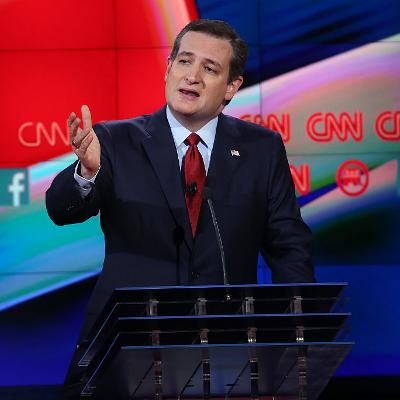
Republican presidential candidates revealed just how far the Republican Party has moved in the decade since President George W. Bush called for spreading democratic principles through the Middle East, sometimes by force. Much of Tuesday’s debate focused on the role the U.S. has played in toppling them in Afghanistan, Egypt, Iraq and Libya—and trying to force out Bashar Assad in Syria—since the terror attacks of 9/11. The certainty that most dictators are bad, not just for their people but for American interests, was no longer a given for Republican candidates, as the U.S. struggles with militants exploiting the vacuums left behind by toppled authoritarian states.

“If you believe in regime change, you’re mistaken,” Kentucky Senator Rand Paul said during the Las Vegas debate.

“We keep hearing from President Obama and Hillary Clinton and Washington Republicans that they’re searching for these mythical moderate rebels,” Senator Ted Cruz of Texas complained. “It’s like a purple unicorn—they never exist. These moderate rebels end up being jihadists.”

Cruz said that the White House “and, unfortunately, more than a few Republicans” have made ridding the world of megalomaniacs like Muammar Gaddafi, who ruled Libya for 42 years until he was ousted and killed in 2011, more important than keeping Americans safe. “We were told then that there were these moderate rebels that would take over,” Cruz said. “Well, the result is, Libya is now a terrorist war zone run by jihadists.” Much the same thing happened in Egypt, he claimed, when “the Obama Administration, encouraged by Republicans,” ousted longtime U.S. ally Hosni Mubarak, and is happening again in Syria.

“We need to learn from history,” Cruz said. “Assad is a bad man. Gaddafi was a bad man. Mubarak had a terrible human rights record. But they were assisting us—at least Gadhafi and Mubarak—in fighting radical Islamic terrorists.” If Assad is removed, “the result will be ISIS will take over Syria, and it will worsen U.S. national security interests.”

Marco Rubio, the Florida senator who pushed for Gaddafi’s ouster, saidrealpolitik sometimes requires distasteful partners. “We will have to work around the world with less than ideal governments,” he said, citing Jordan and Saudi Arabia, which caused heartburn in Amman and Riyadh.

Neurosurgeon Ben Carson said “the Middle East has been in turmoil for thousands of years,” and the idea that U.S. military involvement will straighten things out is misguided: “No one is ever better off with dictators but…we need to start thinking about the needs of the American people before we go and solve everybody else’s problems.”

Jeb Bush said toppling Saddam Hussein—a 2003 war initiated by his brother, President George W. Bush—was a good thing. But he added that its key lesson is that the U.S. must have “a strategy to get out” and leave a “stable situation” behind. That has never been a U.S. strength. Invasions are quick, easy and relatively cheap compared to the decades-long push to try to rebuild a more moderate nation to replace a dictatorship. Americans may dislike war, but they dislike pumping billions to rebuild shattered counties even more.

Paul agreed that it’s the what-comes-next question that has dogged U.S. policy since 9/11. “Out of regime change you get chaos,” he said. “From the chaos you have seen repeatedly the rise of radical Islam.” The issue is one of “the fundamental questions of our time,” and not necessarily black and white. “I don’t think because I think the [Iraq] regime change was a bad idea,” Paul said, “it means that Hussein was necessarily a good idea.”

For generations, the U.S. fought left-wing dictators (Fidel Castro in Cuba, for example) while bolstering right-wing autocrats (Augusto Pinochet in Chile). This was largely because of the Cold War, where leftist regimes allied themselves with the Soviet Union, and rightist ones cozied up to the U.S. But it has been 25 years since the Soviet Union’s demise. That’s unleashed all sorts of local tensions, ranging from nationalist to religious, that the Cold War had kept largely tamped down.

Nowhere has that energy exploded as quickly and violently as in the so-called arc of crisis stretching from northern Africa, through the Middle East, and on to the Central Asian states. Fueled by the nearly 1,500-year split between the Shia and Sunni branches of Islam, the collapsing regimes have entangled the U.S. in civil and religious wars and triggered the rise of terror groups like al Qaeda and ISIS.

“We’ve spent $4 trillion trying to topple various people,” Donald Trump said, referring to the eventual total price tag of the Afghan and Iraq wars. “It’s not like we had victory—it’s a mess.” While the debate over the pros and cons of backing—or, at least, not attacking—dictators will continue, no one on stage challenged Trump’s accounting.


Read more: http://ift.tt/1QqDehf

Donald Trump’s Powerful Ignorance

And four other lessons from Tuesday night’s Republican debate

Here are five things I noticed in last night’s debate:


1. Donald Trump has made fools of us all.

The consensus among the talking heads afterward was that Trump had done fine, maybe helped himself a little, certainly hadn’t hurt himself with his constituency. What were they watching? By any objective standard, Trump had a terrible debate. He said nothing substantive. He made faces–elementary-school faces—when he was attacked. He displayed his powerful ignorance: He had no idea what Hugh Hewitt was talking about when he was asked about the “nuclear triad.” This really is presidential politics for dummies: Control and use of our nuclear arsenal is perhaps the most serious presidential responsibility. Nuclear weapons are deployed in three ways—in land-based silos, in submarines, by aircraft. Three ways. The nuclear triad. This guy is running for president without the most basic vocabulary about weapons that could destroy the world. I suppose this doesn’t matter to his nitwit constituency—but it should. And if that constituency becomes a majority of our electorate, we are truly cooked. That the talking heads think Trump did okay because he didn’t offend his supporters represents journalistic malpractice…but I guess we’ve all been burned by predicting Trump’s demise in the past. The fact that he survives doesn’t make him any less disastrous.

2. Senators Cruz and Rubio lost when they were right.


Their mini-debate was fun to watch. Both are intelligent and articulate—although I think Cruz has a better strategic sense of what he is doing and is running the smarter campaign. It is a testament to the current incoherence of the Republican constituency that each man’s “weakness” was actually a strength. Rubio was entirely candid about immigration. He offered a realistic solution to the problem—but his solution does not involve the deportation of 12 million illegals and so he lost that particular debate to Cruz, who summoned the newly terrifying spectra of Chuck Schumer and called the plan “amnesty.” For his part, Cruz is absolutely right to be wary about “regime change” in the Middle East. It’s been a disaster. But that won’t help him in a party where neoconservatives now control the foreign policy debate.

3. The Governors won.


In fact, Chris Christie put both Cruz and Rubio in their place when he said after a Cruz-Rubio exchange: “If your eyes are glazed over like mine, this is what it is like to be on the floor of the United States Senate…I mean endless debates about how many angels on the head of a pin from people who have never had to make a consequential decision in an executive position.” Christie’s toughness is an informed version of Trump’s posturing. It is simple, compelling, and probably not as dangerous as it sounds–asked if he would shoot down Russian planes if they violated a Syrian no-fly zone, he said yes. This is the sort of tough talk that Ronald Reagan deployed successfully…while simultaneously signaling to the Soviets that he was ready to negotiate seriously with them. The will to bluster was the difference between Reagan and George H.W. Bush. It’s the difference between Christie and Jeb Bush. Both Bushes were better informed than their rivals, but less given to melodrama–although, over time, according to Jon Meacham’s biography of Bush the Elder, even HW came to appreciate the role Reagan’s “evil empire” rhetoric played as a negotiating tool. (Jeb Bush had some very good moments in the debate, directly attacking and flustering Trump–but he has too much respect for the process, is responsible to the point of abstraction in his answers and his opening and closing statements were close to incomprehensible.)

4. The others lost.


Carly Fiorina’s act has grown old. Rand Paul is smart, and generally reasonable on foreign policy, but he belongs to a different party than the Republicans. As Michael Scherer pointed out in his reliably sharp minute-by-minute account of the debate, John Kasich was done in by his spastic karate chop hand motions–he may been the first candidate I’ve ever seen who was rendered incoherent by his own body language. Ben Carson offered a moment of silence for the San Bernardino victims; he has never belonged on this stage–but then, neither has Trump–and Carson, at least, wreaths his presidential incompetence in dignity.

5. Fact Check.


Three persistent errors or elisions should be pointed out. The first is the matter of the defense cuts–the Republican party agreed to these as part of a deficit reduction maneuver called the sequester, because it opposed the tax increases (or loophole closing) necessary to make an actual deal with the Democrats. The GOP thereby showed its priorities: low taxes were more important than national security–a point that Hillary Clinton will doubtless make in the fall (although I’m not so sure that defense spending on weapons we don’t need–i.e. more ships–will increase our security). Second, the much ballyhooed “flood” of illegal immigrants doesn’t exist; indeed, the numbers of illegals crossing the border have declined drastically during the Obama years. Third, Iran will get sanctions relief–an estimated $100 to $120 billion–only after it complies with the nuclear agreement and destroys its enriched uranium stockpile, dismantles 75% of its centrifuges and makes other significant concessions. If Iran doesn’t do those things, there will be no sanctions relief.

11:36 AM ET via TIME


Read more: http://ift.tt/1m7Gukj

Buzzing: The Voice Season 9 Has a Winner! The New Champ Is …

The Voice Season 9 Has a Winner! The New Champ Is …

It’s been a while since Team Adam took home the crown. But when Carson Daly named Jordan Smith the winner of The Voice’s ninth season Tuesday night, Adam Levine earned his third win of the competition.

Just last week, his cover of Queen’s “Somebody to Love” temporarily dethroned Adele’s top spot on the iTunes singles chart. But it was Monday night’s fog-filled performance of “Climb Ev’ry Mountain” from The Sound of Music that secured 22-year-old Smith’s title as the Season 9 champ. Smith reprised the song at Tuesday’s finale after Daly announced his victory.

The Kentucky native also picked “Mary, Did You Know” as his Christmas selection, and sang alongside his coach to The Beach Boys classic “God Only Knows” during the first part of the finale. Team Adam showed their love for the ’60s pop-rock group weeks earlier with a rendition of “Wouldn’t It Be Nice.”

Smith shined from the beginning, when his unique cover of Sia’s “Chandelier” wowed all four coaches during the Blind Auditions. While Levine was the last to turn around, Smith ultimately chose the Maroon 5 frontman who shares his ability to consistently tap into his falsetto range.

The pop singer continued to stun throughout the season, with a rendition of Sam Smith’s “Like I Can” during the battle round, and Adele’s “Set Fire to the Rain” in the knockouts.

With his victory, Smith receives $100,000 and a recording deal with Republic Records. Smith succeeds Season 8 winner Sawyer Fredericks, who hailed from Team Pharrell.

You can read EW‘s full recap of the Season 9 finale here.

Shared at 87 shares/hour

This article originally appeared on Entertainment Weekly. For more stories like this, visit ew.com.


Read more: http://ift.tt/1P7SMVB