Color-Blindness Is Counterproductive

Many sociologists argue that ideologies claiming not to see race risk ignoring discrimination.

lead_9601

Jeff Robertson /  AP

How many times have you heard someone say that they “don’t see color,” “are colorblind,” or “don’t have a racist bone in their body?” Maybe you’ve even said this yourself. After all, the dominant language around racial issues today is typically one of colorblindness, as it’s often meant to convey distaste for racial practices and attitudes common in an earlier era.

Many sociologists, though, are extremely critical of colorblindness as an ideology. They argue that as the mechanisms that reproduce racial inequality have become more covert and obscure than they were during the era of open, legal segregation, the language of explicit racism has given way to a discourse of colorblindness. But they fear that the refusal to take public note of race actually allows people to ignore manifestations of persistent discrimination.

For the first half of the 20th century, it was perfectly legal to deny blacks (and other racial minorities) access to housing, jobs, voting, and other rights based explicitly on race. Civil-rights reforms rendered these practices illegal. Laws now bar practices that previously maintained racial inequality, like redlining, segregation, or openly refusing to rent or sell real estate to black Americans. Yet discrimination still persists, operating through a combination of social, economic, and institutional practices.

Concurrently, it is no longer socially acceptable in many quarters to identify oneself as racist. Instead, many Americans purport not to see color. However, their colorblindness comes at a cost. By claiming that they do not see race, they also can avert their eyes from the ways in which well-meaning people engage in practices that reproduce neighborhood and school segregation, rely on “soft skills” in ways that disadvantage racial minorities in the job market, and hoard opportunities in ways that reserve access to better jobs for white peers.

The Atlantic’s Conor Friedersdorf recently argued that the academic left errs in attacking colorblindness. He suggested that encouraging whites to be color conscious and to think of themselves in racial terms would encourage the nativism embraced by some Donald Trump supporters—that a heightened awareness of whiteness would produce a sense of persecution, and encourage some to rally in defense of white rights. He contends that there is some merit to colorblindness that has been ignored by what he describes as “the academic left,” which spends too much time focused on nitpicking colorblindness rather than drawing attention to “macroaggressions” such as “racially tinged hatred and conspiracy theories directed at the first black president” or the convenience of labeling Mexican immigrants rapists “despite the fact that first-generation immigrants commit fewer crimes than native born Americans.”

As a presumptive member of the “academic left” that Friedersdorf critiques, I read the post with particular interest. I think that Friedersdorf makes some important points worth more detailed attention from both academics and those outside the academy who are familiar with the debates and concepts he references. For instance, academic debates can often become divorced from broader audiences. It is way too easy for academics in many fields to ground their conversations, disputes, and discussions among other like-minded scholars. He’s right to note that, by and large, academics can do a much better job engaging with folks outside of our ivory towers.

However, there are some misrepresentations in Fridersdorf’s piece as well. Based on a single statement from one book chapter in an edited volume, Friedersdorf makes the sweeping generalization that “the academic left casts all proponents of colorblindness as naïve.” I’ve read books and articles by numerous sociologists who critique the colorblind ideology, and while they find problems with the ways this perspective allows individuals to ignore patterns of racial bias, I’ve never seen any studies that broadly categorize advocates of colorblindness in this way. What’s more important to sociologists are the consequences of how this ideology has implications for social inequality.

My colleague Eduardo Bonilla-Silva, for example, has written extensively about the idea of colorblindness, charting the ways that it functions as an ideology that legitimizes specific practices that maintain racial inequalities—police brutality, housing discrimination, voter disenfranchisement, and others. His book Racism Without Racists is part of a broad set of sociological research that draws attention to the ways that colorblind ideology undergirds bigger, more problematic social issues.

There are more than a few members of the “academic left” who argue that colorblindness is problematic precisely because it offers a way to avoid addressing social problems.

Yet, in addition to suggesting that the academic left casts all proponents of colorblindness as naïve, Friedersdorf also contends that they waste time picking apart this concept rather than addressing “macroagressions” like police brutality and growing expressions of virulent racist hatred.  But Bonilla-Silva, among others, describes the ways that colorblindness sustains these very macroaggressions that Friedersdorf thinks are ignored. In other words, Friedersdorf suggests the academic left wastes time dissecting the concept of colorblindness, and would be better served focusing on more pressing, systemic processes of inequality. But a careful read of sociological literature in this area finds that there are more than a few members of the “academic left” who argue that colorblindness is problematic precisely because it offers a way to avoid addressing these exact social problems. Other sociologists like Jessie Daniels and David Cort focus explicitly on researching hate speech on the internet and the lower rates of crime among immigrants relative to native born Americans, respectively—the very issues that Friedersdorf, by his own admission, charges are important and believes are overlooked by the academic left. Sociologists are actually very involved in highlighting these macroaggressions—and in underscoring the ways colorblind ideology allows them to go ignored.

Advocates of colorblindness, like Friedersdorf, tend to claim that emphasizing whites’ group identity as whites (rather than as individuals) is counterproductive. Rejecting colorblindness and encouraging whites to see themselves as members of a distinct racial group, they argue, will produce nativism. They will cling to, rather than critique, the privileges that whiteness affords, which are jeopardized by a more multiracial society. Friedersdorf calls it naïve to believe that upon focusing on their status as members of a racial group and the privilege and power that affords them, “masses of white people will identify more strongly with their racial tribe and then sacrifice the interests of that tribe.”

This is, in the abstract, a compelling point. The trouble is that the weight of the scholarly evidence directly contradicts this argument. Sociologists like Karyn McKinney, Eileen O’Brien, Joe Feagin, Hernan Vera, and Matthew Hughey, who have studied the pathways and trajectories by which whites become involved in antiracist activism, show that contrary to Friedersdorf’s beliefs, moving away from colorblindness can actually serve as a pathway towards antiracism. In many of these studies, as whites came to understand themselves as members of a racial group which enjoyed unearned privileges and benefits, this compelled them to forge a different sense of white identity built on antiracism rather than simply supporting the status quo. Moving away from the colorblind ideology that sociologists critique—the idea that it’s admirable to profess not to see color, that it’s problematic to see oneself as a member of a racial group—is, according to the research in this area, actually an important step to antiracist activism.

In most social interactions, whites get to be seen as individuals. Racial minorities become aware from a young age that people will often judge them as members of their group.

There’s a strong emphasis on individualism in American culture. Friedersdorf argues that “race is a pernicious concept that robs people of their individuality … the academic left also underestimates how divisive it can be to put anything other than individualism at the center of identity.” But ironically, this focus on individualism is itself a function of group position. Whites, by and large, enjoy the luxury of promoting the importance of the individual, because they benefit from living in a racially stratified society where whiteness is normalized. In most social interactions, whites get to be seen as individuals. Racial minorities, by contrast, become aware from a young age that people will often judge them as members of their group, and treat them in accordance with the (usually negative) stereotypes attached to that group.

Everyone wants to be treated as an individual and recognized for their personal traits and characteristics. But the colorblindness that sociologists critique doesn’t allow for this. Instead, it encourages those who endorse this perspective to ignore the ongoing processes that maintain racial stratification in schools, neighborhoods, health care, and other social institutions. Can color consciousness draw attention to these issues? The research demonstrates that it can lead to more understanding of our racially stratified society and can give rise to a willingness to work for change. So from that perspective, it doesn’t seem worth abandoning just yet.


Originally seen via The Atlantic by: ADIA HARVEY WINGFIELD – A contributing writer for The Atlantic and a professor of sociology at Washington University in St. Louis. She is the author of No More Invisible Man: Race and Gender in Men’s Work.

The Plight of the Black Academic

education-nelson-mandela-black-educators

Being a black professor at a predominantly white university can be just as uncomfortable as—if not more so than—being a black student at one.

Graduates arrive for commencement at the University of California, Berkeley

Noah Berger / Reuters

In his new book, The Scholar Denied, the sociologist Aldon Morris writes that contrary to the discipline’s preferred origin story, the field of sociology was actually founded by W.E.B. DuBois, the first black person to receive a Ph.D. in the United States. DuBois earned his degree from Harvard, but due to rampant racial segregation at the time, he was shut out of many employment opportunities. He ended up working at Atlanta University (now Clark Atlanta University), a historically black college with few resources, but still managed to do pioneering work in the field of sociology.

Morris describes in clear detail the ways that DuBois’s emphasis on race as a socially constructed—rather than biological—phenomenon threatened white elites of his day, who much preferred Booker T. Washington’s message that blacks should accept and embrace their subordinate status. Furthermore, many white sociologists co-opted DuBois’s innovative research designs, empirical methods, and scientific approach, while failing to credit him as their originator. Morris argues that consequently, DuBois’s centrality to the discipline of sociology and his role as one of the preeminent analysts of race relations have been obscured.

DuBois lived and wrote his most famous books during the early part of the 20th century, but how different are circumstances for black academics today?

The recent student demonstrations at University of Missouri, Yale, Amherst, Emory, and other universities have drawn much-needed attention to the challenges that minority students, particularly black ones, face at predominantly white colleges and universities. There’s a great deal of research—including the work of the sociologists Joe Feagin and Wendy Leo Moore—showing that the conditions black students are protesting are serious, widespread, and often ignored. In one account, Feagin shares a story of a black student who waits after class to ask a white professor a question about that day’s lecture, only to be told “I thought you were waiting to rob me or something.” Another student describes “one of those sad and angry nights” when, walking to the dorm, white students drove by yelling racial slurs and throwing beer cans at him.

In Wendy Leo Moore’s study of elite law schools, she offers similarly wrenching examples. For instance, there is the white professor who punishes a black female law student for discussing the offensiveness of racial slurs, but does not challenge the white male law student who comments during a class discussion that black students are intellectually inferior. As Moore describes, even the ways law schools teach students to focus on “individual intent” means that social, academic, and legal practices that discriminate against students of color can be summarily dismissed if white social actors “didn’t mean any harm.” Thus, no matter how invidious the action, no matter the consequences of the behavior, legal reasoning centers on individual whites’ intentions and discounts the lived experiences of people of color.

For faculty of color, similar processes are frequently at play. In fact, predominantly white colleges and universities may even be more reluctant to recruit and hire faculty of color than students of color. While students matriculate at an institution for a short period of time and then leave, the tenure system means that faculty of color may remain at a university for decades, even a lifetime. With this longer time frame, these professors develop more of a stake in the school, and may be more empowered to push for the reforms many colleges resist. For universities that see no real reason to change their existing practices, traditions, and organizational cultures, bringing in a critical mass of faculty of color is often a stated goal that never materializes.

Indeed, when it comes to faculty diversity, the numbers suggest a pretty bleak picture. Blacks constitute less than 10 percent of the professoriate, and these numbers thin out the higher the academic rank. And as lots of research shows, when these professors are in the numerical minority, their experiences aren’t all that different from what DuBois encountered as he attempted to navigate higher education in the early 20th century: exclusion, marginalization, and the consistent message that, as a black person, he was not suited for the academy and that his ideas were unwelcome. Indeed, Supreme Court Justice Antonin Scalia’s recent suggestion that blacks are best suited for “less advanced, slower track school[s] where they do well” are strikingly similar to the arguments about black inferiority that DuBois confronted in the 19th century—the very assertions he was able to debunk with scientific research.

Many faculty members and administrators will dismiss this lack of diversity as a pipeline issue, claiming that they simply can’t find “qualified” candidates of color to fill faculty positions. But as was the case in DuBois’s day, many historically black colleges and universities are populated by faculty of color, many of whom are exemplary researchers and teachers who work with a fraction of the resources offered at elite, predominantly white universities. “Qualified” candidates of color are there. They simply are not proportionately represented in historically white institutions.

For faculty of color who do seek and find employment at predominantly white schools, research suggests that the issues they face are in some ways similar to those that students of color have described in the recent wave of protests. For example, in a recent study, the professors Ebony McGee and Lasana Kazembe noted that black faculty were racially stereotyped at work, including being generally expected to entertain and perform for colleagues in ways that were not expected of their white counterparts. Other black professors report that if they study issues related to race, their research is assumed to be less credible, serious, and rigorous than their white peers—even if white colleagues also study racial issues. Black faculty also do a disproportionate amount of service work—jobs that are expected of workers but not explicitly required. These can include mentoring and advising students and junior faculty, serving as a faculty advisor for campus clubs, or being on committees.

And there are gender dynamics present as well. The sociologist Roxana Harlow found that black female professors had to manage gendered racial stereotypes that they were “mean” and “cold” in the classroom, stereotypes that are commonly applied to black female professionals more generally. And this says nothing of the racialized assumptions that many students (and fellow faculty) bring with them to the university—that black Americans, and by extension, black professors, are less knowledgeable and credible than their peers of other races, regardless of the subject matter they teach. This means that in practice, black faculty routinely face students, coworkers, and administrators who assume that they are not truly qualified for or capable of faculty work—all the while concealing the understandable feelings of frustration and annoyance that result. The overall message is that, like black students, black faculty simply do not belong.

Though these issues are complex and won’t be solved easily, universities could begin doing more to support faculty and staff of color. DuBois defined the premier problem of the 20th century as the issue of the color line, and this certainly shaped his experiences in higher education. It doesn’t have to be this way today.


Originally seen via The Atlantic by: ADIA HARVEY WINGFIELD – A contributing writer for The Atlantic and a professor of sociology at Washington University in St. Louis. She is the author of No More Invisible Man: Race and Gender in Men’s Work.

Hillary Clinton says Donald Trump Is ‘ISIS’s Best Recruiter’


rt_clinton_cf_151219_12x5_1600

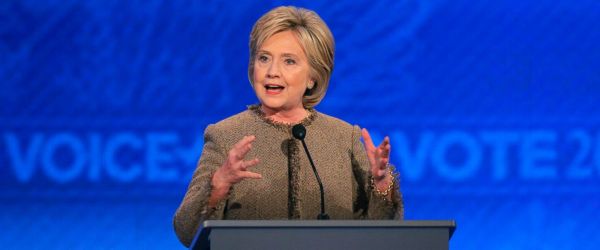
Secretary of State Hillary Clinton took a hard stance against rhetoric from GOP front-runner Donald Trump, painting him as a potent and powerful tool for ISIS.

“He is becoming ISIS’s best recruiter. They are going to people showing videos of Donald Trump insulting Islam and Muslims in order to recruit more radical jihadists,” Clinton said during Saturday’s Democratic debate, hosted by ABC News.

Clinton offered no specific evidence of the claim. ABC News has reached out to the Clinton and Trump campaigns for comment.

When asked about her emphasis on gun control in the wake of the San Bernardino attacks, Secretary Clinton took the opportunity to bash Trump – who she says is pushing the wrong narrative in the fight against ISIS.

“I worry greatly that the rhetoric coming from the Republicans, particularly Donald Trump, is sending a message to Muslims here in the United States and literally around the world that there is a clash of civilizations,” said Clinton, “that there is some kind of western plot or even war against Islam, which then I believe fans the flames of radicalization.”

Clinton also said that she does not believe that calls to arm more Americans in the wake of recent terror attacks will make Americans safer.

“Guns in and of themselves, in my opinion, will not make Americans safer. We lose 33,000 people a year already to gun violence. Arming more people to do what I think is not the appropriate response to terrorism,” she said.


Written by:  JOHN VERHOVEK via ABC News

Did Simple Nuclear-Triad Question Stump Trump?

The WORST Answer in Political Debate History? Luckily, Marco Rubio was there to teach Trump what a Nuclear Triad is…

(Source: The Young Turks / YouTube)


Washington (CNN) – Did a simple question about the nuclear triad stump aspiring commander-in-chief Donald Trump?

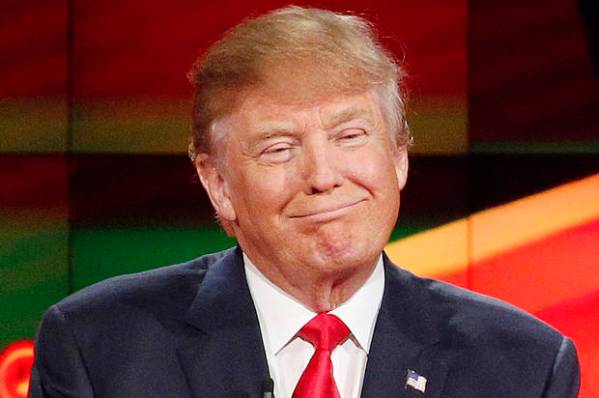
During Tuesday night’s CNN-hosted Republican debate, Trump gave a meandering response when conservative radio host Hugh Hewitt of Salem Radio Network asked about the U.S. nuclear capability.

“I think we need somebody, absolutely, that we can trust, who is totally responsible, who really knows what he or she is doing. That is so powerful and so important,” Trump said, before touting his opposition to the war in Iraq.

“But we have to be extremely vigilant and extremely careful when it comes to nuclear. Nuclear changes the whole ball game,” he added.

Hewitt followed up by asking which “of the three legs of the triad” was Trump’s priority.

“For me, nuclear, the power, the devastation, is very important to me,” Trump replied.

But “nuclear,” “the power” and “the devastation” aren’t the three legs of the U.S.’s nuclear triad.

So what are the components of the nuclear triad?

The nuclear triad refers to the three ways the U.S. is capable of firing nuclear weapons.

As Florida Sen. Marco Rubio explained during the debate following Trump’s mishmash of a response: “The triad is the ability of the United States to conduct nuclear attacks using airplanes, using missiles launched from silos from the ground and from our nuclear subs.”

To add a little more specificity, the planes are heavy bombers; the silos house intercontinental ballistic missiles and the submarines also use ballistic missiles to deliver a nuclear payload.

Rubio, who avoided attacking Trump on Tuesday, didn’t directly call out Trump for blanking on the national security question. Instead, he directed his explanation to the “people at home” who likely “have not heard that terminology before.”

The Trump campaign didn’t respond to a request for comment.

So why does the U.S. need three ways of delivering nukes?

Rubio summed it up as: “All three of them are critical. It gives us the ability at deterrence.”

In more expansive terms, they’re all key components because they protect the U.S.’s ability to launch nuclear strikes should one or two of those capabilities be destroyed.

If the underground silos backfire and the planes capable of delivering nuclear weapons get destroyed, the U.S. would still have stealthy nuclear submarines to deliver crippling strike.

The U.S. and Russia are the only two nuclear powers in the world to have triad capabilities, and both countries are eager to maintain that edge going forward.

Makes sense. So what’s so pressing that this had to be included in the debate?

All three components of the nuclear triad are aging and the next president is going to have to address that issue.

America’s nuclear submarines are all more than 30 years old and its most dominant bomber jets remain the 60-year-old B-52s. The Pentagon has also called for upgrading the U.S. arsenal of ICBMs, or intercontinental ballistic missiles.

The Pentagon has estimated that it will need to spend as much as $18 billion per year over the next 15 years — for a grand total of $270 billion — to modernize the nuclear triad.

Amid budget cuts on Capitol Hill, it’s struggled to come up with the funding to get that job done.

Written by: By Jeremy Diamond via CNN

Donald Trump gets away with bullshit: The magical secrets that help him con the press

Trump simply isn’t concerned with the truth of anything he says. He’ll elude the media until they understand that

Donald Trump, Ted Cruz

Credit: AP/John Lochner

The reality of Donald Trump’s months-long dominance of the GOP primary race has suddenly started sinking in with political elites, as has a new willingness to openly talk about his pervasive lying.

After that, the willingness to start using the word “fascism” was not far behind. The phenomena are related, of course. GOP politics have been based on lies and authoritarianism since at least the time of Richard Nixon. But now it’s happening in a new key, in a higher register. The old system for managing the lies, manipulating their salience, directing and redirecting the anger and adoration they arose, that system has broken down badly in the last several years, and it now seems to have broken down irreparably.

Nate Silver makes a crucial point, however, tweeting, “One can coherently argue that Trump isn’t ‘lying’ so much as bullshitting, in the H.G. Frankfurt sense of the term.” Frankfurt’s book “On Bullshit” argues that bullshitting is a more radical attack on truth than lying is:

[B]ullshitters seek to convey a certain impression of themselves without being concerned about whether anything at all is true. They quietly change the rules governing their end of the conversation so that claims about truth and falsity are irrelevant.

Bullshitting is anything but new to politics, of course. So the question really is: how is Trump’s bullshitting different? Although David Roberts doesn’t use the term “bullshit”, he does keenly see the problem in similar terms. The establishment media “don’t mind being properly lied to; it’s all part of the game,” Roberts writes. “What they cannot countenance is being rendered irrelevant. Trump is not kissing the ring.” Trump’s contempt for the media is all part of the proto-fascist package, of course, as well as being the natural outgrowth of decades of media-bashing.

More on Roberts in a moment, but first a nod to what the alternative might be. Jay Rosen has a sharp analysis of how this breakdown in gatekeeping function reflects institutional problems connected to a vapid notion of objectivity, which he’s elsewhere critiqued as “the view from nowhere,” a term he’s been using since 2003. If asked “What’s your agenda in covering the campaign?” they would all reply, “No agenda, just solid coverage.” But the one journalist who’s perhaps done the best job of accurately portraying Trump, Univision’s Jorge Ramos, clearly has an agenda — representing his audience’s intense concern for comprehensive immigration reform — and yet, Rosen notes, that doesn’t prevent him from accurate, incisive reporting; in fact, it helps guide him in that reporting, which has pressured politicians of both parties:

The example of Ramos shows that knowing what you’re for doesn’t have to mean joining the team or taking a party line. It’s possible to maintain your independence, win trust with your audience, and gain a clear sense of purpose when you’re out on the campaign trail. But you have to break with the pack.

Of course, every news organization can’t be Univision, but there other ways to find a different agenda, one that actually connects with what people care about. Rosen links back to 2010 proposal he made for a citizen’s agenda approach, one that would start by asking the public, “What do you want the candidates to be discussing as they compete for votes in this year’s election?” and use that as the foundation to build on. Another approach could be built based on public interest polling of the sort developed by Alan Kay in the 1980s, which I wrote about in October. Alternatives exist. And they provide ways to reconnect media with the broader public they’re supposed to serve. But it takes real courage to pursue them.

That said, let’s return to the question of how things suddenly got so much worse this cycle with Trump. As Roberts points out, GOP truthiness long predated Trump, but the media’s power to restrain it has eroded precipitously. He notes that the right has long been working hard to erode the media’s critical power, with constant accusations of bias to stifle critical media judgments on the one hand, while on the other hand developing “a network of partisan think tanks, advocacy organizations and media outlets that provide a kind of full-spectrum alternative to the mainstream.”

The result, Roberts says, “has been a kind of fragile detente. A certain style of lying has become more or less acceptable, as long as it follows unspoken rules,” rules which Donald Trump is now breaking. Or, to rephrase it in Frankfurt’s terms, one framework of bullshit is being challenged by another. Roberts identifies three rules of lying that Trump has broken:

“1.) Lies about policy are fine; lies about trivial, personal or easily verifiable claims are not.” Trump, however, tells both kinds of lies with impunity.

“2.) Lies are fine as long as an ‘other side’ is provided.” But Trump doesn’t bother with this at all. “He rarely mentions studies or experts, other than occasionally name-dropping Carl Icahn. He rarely mounts anything that could even be characterized as an argument. He simply asserts.” Which leaves journalists fresh out of fig leaves. “He calls their bluff, forcing them to be with him or against him,” which clearly they can’t do using what Rosen calls the “view from nowhere” model they’ve lived within for so long.

“3.) Nine lies are fine as long as the tenth is retracted.” Call it the face-saving rule. In contrast to the constant flood of lies, “when a politician goes overboard and makes an obviously, verifiably false claim about a matter of recorded fact, the media will browbeat him or her into retracting it and apologizing.” It lets the press feel relevant, even powerful. “But Trump does not back down, retract or apologize, ever, not even for the most trivial thing. He refuses to allow journalists and pundits to validate their watchdog role.”

Roberts goes on to make additional significant points — that Trump is basically an opportunist beneficiary, “taking advantage of a faction of the electorate that has been primed to respond to someone like him,” over a period of decades, and that “the social and demographic trends driving the Trump phenomenon are far deeper than Trump himself. They will outlast him.” All that is true, and more. Both Roberts and Rosen deserve to be read and re-read in full.

But I believe that this list of ways that Trump breaks the rules is only a first approximation, primarily because it presents an even-handedness that never actually existed. For example, most of Bill Clinton’s presidency was plagued by ongoing rightwing conspiracist obsessions which filtered into the mainstream media. Most of the really wacky stuff (like the “Clinton body count”) never got through to the likes of the New York Times and the Washington Post, but those two bastions of the “liberal media” did carry the torch for the Whitewater investigation, as Gene Lyons documented in Fools for Scandal: How The Media Invented Whitewater. They were instrumental in keeping the investigation alive, most notably by burying the results of the Pillsbury Report, commissioned by the Resolution Trust Corporation, which found the Clintons innocent of any wrongdoing in 1995.

So it’s not really true that the media polices “lies about trivial, personal or easily verifiable claims” whether on the left or the right. Indeed, the explosive growth of conspiracies in the 1990s helped to erode the distinction between such lies and lies about policy. Conspiracy narratives question, reinterpret or outright fabricate facts on the one hand and policies on the other. One hallmark of conspiracist thinking is its self-sealing nature: any evidence that appears to refute it is actually just evidence of an even-deeper conspiracy. The conservative embrace of global warming denialism is a major example of how such thinking has thrown the mainstream media into a semi-permanent state of disarray.

Still, the list Roberts offers is a decent first approximation. If not an iron law, it points to strengths and weaknesses of how the media has generally dealt with lies up till now. What’s more, it helps illuminate the way that Sarah Palin helped set the stage for Trump. In a broader sense, as David Neiwert touched on recently, Palin was a significant figure in the virulent growth of rightwing populism which Trump embodies today, and which is bringing dangerously close to outright fascism.

Perpetuating “lies about trivial, personal or easily verifiable claims” is hardly the worst or most central thing about a movement tending towards fascism, but it is an inescapable ingredient. The sense of grievance is a root sentiment such movements thrive on, and figures like Palin and Trump are master grievance collectors, who never let inconvenient facts stand in their ways: They simply invent new ones to serve their needs. Trump’s breaking of the second lie gets closer to the heart of the fascist direction he’s taking us in: the overthrow of all existing institutions, sweeping them aside as forms of weakness and disease.

With these thoughts in mind, we can look back at a scandal plaguing Sarah Palin as she stepped onto the national stage, and see it in a very different light — the Troopergate scandal. It concerned her abuse of office in pursing a vendetta against her former brother-in-law, Mike Wooten, attempting to get him fired as state trooper and letting her husband run wild in the process.

There were two more deeply troubling stories about Palin that the press overlooked at the time. The first concerned her long history of involvement with secessionists in the Alaska Indepenence Party, an excellent account of which appeared here in Salon, by David Neiwert and Max Blumenthal. It’s certainly hard to square Palin’s self-identification as a “real American” with years of palling around with folks who want nothing more than to leave America forever, but that’s exactly what Palin did. The second concerned her life-long association with an extremist religious cult movement, known as the Third Wave movement, or the New Apostolic Reformation. It’s part of a wider dominionist movement which seeks to take “dominion” over secular society and government in the U.S. and throughout the world. The mainstream media wouldn’t touch reporting on Palin’s NAR involvement; for that you had to rely on researchers like Bruce Wilson and Rachel Tabachnick at Talk2Action.org.


Written by  via SALON