Why it matters that Serena Williams is on the cover of Sports Illustrated

Updated by  via VOX

vox

Since 1954, Sports Illustrated has declared the most groundbreaking, important person in sports each year, starting with British runner Roger Bannister, the first known person to ever run a mile in under four minutes. This year the magazine has named its ninth woman ever to the list: tennis champ Serena Williams. While it may not be a shock that this dominant female athlete was named Sports Illustrated’s 2015 Sportsperson of the Year — she won the Australian Open, Wimbledon, and the French Open, after all — it’s actually kind of rare, given the gender breakdown over the years.

While American Pharoah devotees shared their dismay over the choice Monday — the Triple Crown–winning horse won SI’s popular vote to get the title — writer S.L. Price recounted Williams’s tumultuous (and mostly victorious) year on the court.

Her major title bids came with plenty of health battles: an all-consuming flu, bruised bones, and busted knees, to name a few. She returned to Indian Wells Tennis Garden in March after a 14-year boycott following a matchup against Steffi Graf marred by jeering and racist comments. This year also included Williams’s disappointing loss at the US Open in September, when she lost to 43rd-ranked Roberta Vinci, missing her shot at the calendar Grand Slam and the chance to beat Graf’s record 21 career major title wins.

Off the court, though, Williams is an outspoken, stylish, confident social media darling and sports mogul with devoted fans around the world. At 34, she’s also been able to compete longer than many of her peers have been able to. And that’s why her newest title should come as no surprise.

Serena Williams is the third solo woman to receive the honor

Since Sports Illustrated started awarding athletes and coaches with its top title, the few women who have won it also shared the honor with men. Williams is one of only three women with the title who did not share the moment with a man — and she’s also the first since Mary Decker in 1983 to have the solo title. Meanwhile, 24 individual men have been named Sportsman of the Year since 1983. Among women, the title has also evaded traditional team players aside from the collective 1999 titleholders, the US Women’s National Soccer Team, after their monumental World Cup win. Here’s how women have fared on the list since 1954:

  • 1972: Billie Jean King, tennis (shared with men’s college basketball coach John Wooden)
  • 1976: Chris Evert, tennis
  • 1983: Mary Decker, track and field
  • 1984: Mary Lou Retton, gymnastics (shared with Edwin Moses, track and field)
  • 1987: Judi Brown King, track & field, and Patty Sheehan, golf (shared with six other athletes)
  • 1994: Bonnie Blair, speed skating (shared with Norwegian speed skater Johann Olav Koss)
  • 1999: US Women’s National Soccer Team
  • 2011: Pat Summit, University of Tennessee women’s basketball coach (shared with Mike Krzyzewski, Duke University men’s basketball coach)
  • 2015: Serena Williams, tennis

Choosing outstanding women athletes isn’t a groundbreaking feat for another sports authority. Since 1931, the Associated Press has named one man and one woman each as athletes of the year (Williams was named to that list in 2002, 2009, and 2013).

It’s rare to see a woman on the cover of an issue of SI who isn’t a model

While the Associated Press started publishing a gender-equal list in the 1930s, things haven’t been quite as equal for Sports Illustrated. After 61 years of publishing, SI’s weekly issues rarely feature women athletes on its covers. A University of Louisville study of the magazine from 2000 to 2011 found that women appeared on 4.9 percent of all Sports Illustrated covers; about a third of those featured women of color.

“Of the 35 covers including a female, only 18 (or 2.5 percent of all covers) featured a female as the primary or sole image,” the researchers wrote in the International Review for the Sociology of Sport. “Three covers included females, but only as insets (small boxed image), or as part of a collage background of both male and female athletes.”

Interestingly, more female athletes appeared on the covers from 1954 to 1965 than they did from 2000 to 2011. After that period, the distribution spread. By 2011, the average rate at which women were featured on the cover was about one woman per year, not counting the magazine’s highly anticipated annual swimsuit issue, despite growing participation of women in sports. The researchers attributed this to the rising dependence on corporate sports leagues, mainly the big four: the NBA, NFL, NHL, and MLB, Pacific Standard reports.

But SI has been slightly better in recent years

Considering 2015 was an incredible year for women in sports, at least in the United States, Sports Illustrated naming a woman to its annual title should be no surprise. With Williams’s big year in tennis, MMA fighter Ronda Rousey’s tough-talking near dominance, the US women’s national soccer team’s World Cup win, and the debut of professional women’s hockey, among many other landmark moments, you’d think we’ve reached a new level of respect for women athletes.

(SOURCE: Ronda Rousey on a 2015 cover of Sports Illustrated)

In some ways, we have. This year’s survey of SI covers shows an uptick in female presence: the University of Connecticut’s women’s basketball team’s uncanny national championship win, Rousey being called the “world’s most dominant athlete,” multiple covers on US soccer, and one on Serena Williams’s grand slam effort in August.

Last year’s SI covers featured one special Olympic preview with four covers — three of which featured women athletes — an issue with gold medal skier Mikaela Shiffrin, University of Connecticut women’s basketball star Breanna Stewart as one of six special March Madness covers, and Little League World Series phenom Mo’Ne Davis.

In 2013, there were no female athletes on the covers, and 2012 featured the US women’s Olympic gymnastics team, an all-text cover about Title IX, and Olympic gold medalist Kayla Harrison, a judoka. Prior to that, as mentioned above, the rate was about one female athlete per year.

Overall coverage of female athletes in sports media is pretty bad

Naturally, sports coverage isn’t all about Sports Illustrated. Most televised sports coverage generally goes to men’s pro and college football, basketball, and baseball, according to a 2015 study published in Communication & Sport. The study, which evaluated 25 years of sports coverage among ESPN’s SportsCenter and Los Angeles’s broadcast network affiliates, showed 3 percent of all sports coverage was dedicated to women’s sports. To be male in sports is to be the default — for example, the term March Madness nearly always means the men’s college basketball tournament, even though the women’s tournament goes by the same name.

When it comes to the amount of coverage throughout this tournament, ESPN’sSportsCenter devoted 83 on-air stories to the men’s tournament in March 2014, versus eight about the women’s tournament that year. Researchers often found the coverage was simply blah when focus turned to women athletes.

“We found that men’s sports were presented with far more enthusiasm, and excitement, the commentators consistency deploying vocal inflections, high-volume excitement, and evocative descriptors,” the researchers wrote. “Listening to commentators describe a women’s sports event was usually like hearing someone deliver a boring after-thought, with an obvious lack of enthusiasm.”

With that, it’s probably no surprise that only 10.2 percent of overall sports coverage was produced by women, according to the Women’s Media Center’s annual report on women in the US media — and that’s a 7 percent drop from 2014’s figure.

Sportsman and sportswoman? Or sportsperson?

One significant factor this year is that Sports Illustrated has called Williams the Sportsperson of the Year, taking on a more gender-neutral term than sportswoman. Does this mean the next man named to the list will also be called a sportsperson, rather than a sportsman? Until sports loses all of its gendered divisions — and who knows when that’ll be? — I guess we’ll know whenever the publication names the next man (or horse, perhaps?) to the list.

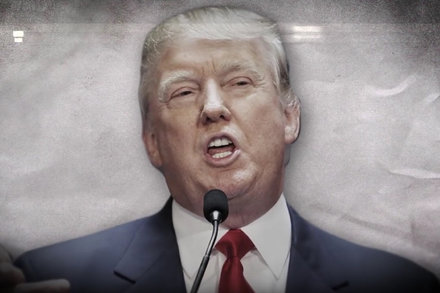
Group Backing John Kasich Likens Donald Trump to Hippo in New Ad

HIPPO-CRIT

By NICK CORASANITI via NYTimes

New Day for America, a “super PAC” supporting Gov. John R. Kasich of Ohio, is aggressively attacking Donald J. Trump, now with a mocking commercial titled “Hippo-Crit” that suggests Mr. Trump belongs in the White House about as much as he belongs in a zoo.

On Screen

Mr. Trump and a hippopotamus, their mouths agape, alternate or share the screen, as a visual device resembles the bars of a cage. Both are seemingly “voiced” by the snorts and grunts of an indeterminate off-screen mammal. Unflattering images of Mr. Trump flip or spin away before surveillance-style images show Trump-brand neckties made in China and his “palatial D.C. hotel” being built by “illegal immigrants.” Available to save the day in the end is Mr. Kasich, shown in a contemplative pose beside an American flag and a large, Oval Office-like window.

The Message

Other attacks on aspects of Mr. Trump’s background have whiffed. But this ad pungently goes after Mr. Trump on two of the red-meat issues that have made him so popular with rank-and-file Republicans: illegal immigration and the outsourcing of American jobs.

Fact Check

Mr. Trump’s name-brand ties are indeed made in China, a decision he defended on grounds that China “has manipulated their currency to such a point that it’s impossible for our companies to compete.” The Washington Post found several workers at Mr. Trump’s Washington hotel project who had entered the country illegally. His campaign says the project is following all applicable laws.

Where

On New Hampshire television stations as part of a $2.5 million ad campaign against Mr. Trump.

Takeaway

Attacking Mr. Trump on immigration and jobs — issues on which he has based much of his campaign — and with the sort of ridicule that Mr. Trump has used on others, could gain Mr. Kasich some much-needed attention.

via IFTTT

Chris Christie Reminds Voters, Again and Again, of His Prosecutor Days

christie

By ALAN RAPPEPORT via NYTimes

Most governors who seek the presidency promote executive experience as their chief credential, regaling voters with tales of big decisions they have made and budgets they have balanced.

Gov. Chris Christie of New Jersey also mentions those things, but lately he has been digging deeper into his résumé. With terrorism taking center stage in the 2016 race, Mr. Christie seems to take the most pride in his days as a federal prosecutor.

Five times during Tuesday’s Republican presidential debate, and often unprompted, Mr. Christie managed to work in the fact that he was once a United States attorney in New Jersey. The experience, he argues, makes him best suited to destroy the Islamic State.

“I will tell you this, I’m a former federal prosecutor, I’ve fought terrorists,” Mr. Christie said in opening remarks.

Moments later, when asked how he would alleviate the fear of terrorist attacks that has become pervasive in America, Mr. Christie said that because of his work as a prosecutor he knew that terrorists were planning attacks elsewhere. People have good reason to be worried, he suggested.

“I could tell you this, as a former federal prosecutor, if a center for the developmentally disabled in San Bernardino, Calif., is now a target for terrorists, that means everywhere in America is a target for these terrorists,” Mr. Christie said.

As rivals debated the details of immigration policy, Mr. Christie jumped in to make the case that Senator Marco Rubio and Senator Ted Cruz were just talkers who knew nothing about really fighting terror. As a prosecutor, he reminded viewers again, he has actually gone up against terrorists.

“This is the difference between having been a federal prosecutor instead of being one of 100 people debating it,” Mr. Christie said, explaining that he had used the Patriot Act to stymie attacks in New Jersey.

Mr. Christie was appointed as federal prosecutor in 2001 and served in that role until 2008, before becoming New Jersey’s governor. His popularity in the state has faded in recent years amid economic turmoil, the George Washington Bridge scandal and frequent travel around the country to raise money and campaign for higher office.

Looking to jump-start his flagging presidential campaign, Mr. Christie has latched onto his experience from the aftermath of attacks of Sept. 11, 2001, to remake himself as a national security candidate.

As Tuesday’s debate was winding down, the conversation turned to taking in Syrian refugees. Mr. Christie has taken a hard line on the issue, saying that none should be accepted and pointing to concerns raised by James Comey, the F.B.I. director.

“Now, listen, I’m a former federal prosecutor, I know Jim Comey,” Mr. Christie said, mentioning that the two go way back and had even worked together in law enforcement. “He was the U.S. attorney in Manhattan when I was a U.S. attorney in New Jersey.

via IFTTT

NPR #News: No Government Shutdown Likely, But Here’s What’s In The Spending Bill

Published by Susan Davis via NPR

ap_149712644584_wide-86d5caa3df80eba377219de4e722551fc7917513-s800-c85

J. Scott Applewhite / Associated Press

House Speaker Paul Ryan reached a deal late Tuesday on two major pieces of legislation: a $1.1 trillion spending package and a $645 billion package of tax breaks.

The $1.1 trillion spending bill includes $548 billion in defense spending, $518 billion in non-defense spending, and $73.7 billion in additional funds for the Pentagon for ongoing combat operations.

The package is made up of the 12 annual spending bills, which have been bundled into one “omnibus” spending deal that provides funding for the next fiscal year, through Sept. 30, 2016.

Democrats had the upper hand in spending talks because their votes will supply the bulk of support to pass it. They successfully swatted down Republican efforts to effectively block Syrian refugees from entering the U.S., defund Planned Parenthood, undo President Obama’s environmental regulations and repeal a campaign finance law.

The spending package includes two notable “riders” or unrelated policy provisions tucked into the must-pass bill.

The first overhauls the visa-waiver program, which allows foreign travelers from 38 nations to make short trips to the U.S. without a visa. The provision includes an added layer of security screening for those travelers if they have recently visited Iraq, Syria or other nations with significant terrorist activity. A stand-alone bill on the same provision passed the House with overwhelming bipartisan support last week.

The second provision ends the 40-year ban on exporting U.S. oil. The provision is a victory for Republicans, although many Democrats from oil-friendly states, like North Dakota Sen. Heidi Heitkamp, cheered its inclusion in the spending package.

Republicans rallied in support of the tax side of the deal. The package makes permanent many popular business tax breaks and delays new taxes on medical devices and high-end health insurance plans that are supposed to help pay for the Affordable Care Act. Many Democrats, particularly in the House, are expected to oppose the tax package, which will, in turn, rely on GOP votes for passage.

The House is scheduled to vote on the measures separately. The tax package will get a vote Thursday, while the spending package will get a vote Friday. The Senate is expected to then bundle the two packages together for a final vote before sending it to President Obama for his signature.

Here are some additional highlights from the spending bill:

— A year delay on new menu labeling regulations for grocery stores and food retailers to give them more time to comply with new federal standards.

— $282 million in additional funds for the Census Bureau to prepare for the 2020 census.

— Extends the existing prohibition on the transfer or release of Guantanamo detainees into the U.S.

— A 1 percent military pay raise and $300 million to address a military housing allowance shortfall.

— $111 billion for new military equipment, including 68 F-35 Joint-Strike Fighters, 102 Black Hawk helicopters, 64 remanufactured Apache helicopters, 3 littoral combat ships, 2 attack submarines, 2 DDG-51 guided missile destroyers, 7 EA-18G Growlers, 5 F-18E/F Super Hornets and 12 KC-46 tankers.

— It largely freezes funding levels for the Internal Revenue Service, which is receiving $1.7 billion less than President Obama originally wanted.

— $45 million for school improvement in Washington, D.C., including $15 million for scholarships to low-income students in the District to attend private schools.

— A pay freeze for Vice President Biden.

— $1.9 billion for the U.S. Secret Service, which is an increase of $268 million above last year.

— Cuts $15 million in spending for the Independent Payment Advisory Board, created under the Affordable Care Act.

— An additional $2 billion in funds for the National Institutes of Health for a total of $32 billion.

— An additional $175 million for a total of $5.6 billion for U.S. embassy security.

— Zero funding for high-speed rail, but Amtrak grant funding holds at $1.4 billion with $50 million provided to improve rail safety.

Here are some additional highlights from the tax package:

— It makes permanent the $1,000 child tax credit.

— It makes permanent the American Opportunity tax credit, which helps pay for college. It’s indexed to inflation and helps cover qualifying expenses in the first two years of post-secondary education.

— It makes permanent the earned income tax credit for low- and moderate-income workers. For 2009 to 2017, the EITC is temporarily increased for those with three or more children.

— It makes permanent a $250 deduction for elementary and secondary school teachers who pay out of pocket for school supplies.

— It makes permanent the research and development tax credit.

— It makes permanent a 20 percent employer wage credit for employees called to active military duty.

— It extends through 2016 an expensing provision that covers up to $15 million of qualified film, television and live theater productions.

— It extends through 2016 the $13.25 per proof gallon excise tax for Puerto Rican and U.S. Virgin Islands rum.

— It extends through 2016 the 10 percent credit for plug-in electric motorcycles and two-wheeled vehicles, capped at $2,500.

— It extends through 2016 the tax credit for manufacturers of qualifying energy-efficient residential homes.

— A provision that allows an individual to exclude from gross income any payment received as compensation for a wrongful incarceration.

— A provision defines hard cider for levying alcohol excise taxes as a beverage made from apples or pears, with an alcohol content of 0.5 to 8.5 percent, and a carbonation level that does not exceed 6.4 grams per liter.

— A provision prohibiting IRS employees from using personal email accounts to conduct any official business.

NPR #News: Congress’ Funding Package Offers No Debt Assistance To Puerto Rico

Published by CAMILA DOMONOSKE via NPR

gettyimages-479121010_wide-0970882d425eb69d56168b73ef3bb36498e985e2-s800-c85

The Puerto Rican capitol building, above, in San Juan is seen on July 1, 2015. The island’s residents are struggling to cope with the government’s $72 billion debt. (Photo Credit: Joe Raedle / Getty Images)

A massive tax and spending bill, designed to keep the U.S. government running for months, doesn’t include any direct debt relief for struggling Puerto Rico.

The unincorporated U.S. territory is struggling to make payments on $72 billion of debt. There are serious concerns that the island may default on Jan. 1, when more than $900 million comes due (including over $350 million the Puerto Rican government is constitutionally obligated to pay). The island only narrowly managed to make a $350 million payment on Dec. 1.

Puerto Rico’s economic woes run deep and have been building for a while, as NPR’s Greg Allen reported in October:

“The island’s financial problems are tied to a larger economic crisis. Over the last decade, Puerto Rico has lost a quarter-million jobs, and unemployment is twice the national average. The spiraling economy has sparked a huge outmigration: 84,000 people left the island last year. Treasury official Antonio Weiss says once the money runs out in Puerto Rico, essential services may be cut, and the financial problems could become a humanitarian crisis.”

Some lawmakers had proposed that municipalities in Puerto Rico be permitted to declare bankruptcy. Currently, that option is available to cities in U.S. states, but not to municipal entities in U.S. territories.

The White House had suggested a new kind of bankruptcy, specifically for territories, that would allow Puerto Rico to restructure its debt more directly.

Republican Sen. Orrin Hatch, the head of the Senate Finance Committee, opposed both those ideas — but suggested instead that Congress create an “oversight authority” that could spend up to $3 billion to stabilize Puerto Rico’s finances, Reuters reported Tuesday.

None of those proposals appeared in the tax and spending passage as of Wednesday, Reuters notes.

While Congress’ funding bill doesn’t include any direct relief for Puerto Rico’s debt crisis, it does prescribe reforms to Puerto Rico’s health system, The Chicago Tribune reports:

“The legislation would increase payments to hospitals on the island and provide bonusMedicare payments to doctors and medical facilities that adopt electronic health record-keeping, according to the text of the bill posted early Wednesday on the House website. …

“Puerto Rico, where 46 percent of citizens live in poverty, gets a lower percentage of federal funds for Medicaid than 26 other states even though none comes close to its levels of privation. Making up for inadequate federal funding has contributed to Puerto Rico’s debt crisis, commonwealth officials say.”

House Speaker Paul Ryan is expected to bring the deal to a vote on Thursday, and the Senate is expected to vote by the end of the week, Reuters reports.

“If Congress doesn’t take action, the consequences of their inaction will be as severe as they are predictable,” Puerto Rico’s sole Member of Congress tweeted Wednesday.