How Hillary Clinton could win the White House by March

First, crush Marco Rubio, and then take the rest of the year off.

mw-dx468_arends_20151023161719_zh
(Source: Getty Images/ Chip Somodevilla)

Hillary Clinton’s only real competition among Republicans is Marco Rubio. Ted Cruz and Donald Trump are too extreme for most Americans, and truly leave her unparalleled in experience and political clout.

If Hillary Clinton and her allies are smart, they’ll spend their $50 million-plus campaign war-chest over the next few months making sure Marco Rubio doesn’t get the Republican nomination.

They’ll run ads in the primary states trashing the Florida senator among conservatives — cleverly hiding the source of the ads behind secretive super PACs with conservative-sounding names.

They’ll encourage Democratic activists to cross over to GOP primaries to support Rubio’s extremist opponents.

Hillary herself may even help out by making a couple of high-profile speeches in which she praises Rubio for his “moderation” and “bipartisanship” — especially, she might say, “on the subject of immigration.” Nothing could hurt the young senator more with the GOP base.

Obama could take him golfing.

Following this week’s Republican debate, it looks increasingly like the race is down to three candidates: Texas Sen. Ted Cruz, real-estate huckster Donald Trump and Rubio.

If the GOP goes ahead and picks Cruz or Trump, Hillary could probably take the rest of 2016 off to work on her inauguration speech. Both men are extremists, and are traveling with more baggage than Kim Kardashian. The only people who think they are remotely electable in a general election are the increasingly narrow group of people who make up the Republican party base.

We’re talking about people who think “Benghazi” is one of the top three issues facing America.

Who think global warming is a sinister “one-world” plot to take away our pickup trucks and make us all slaves.

And who think 300 million guns are making us all “safe” while 5-year-old Syrian refugees are going to kill us.

The biggest single fact: While individuals rise and fall from poll to poll, overall the four extremist candidates of Trump, Cruz, Rand Paul and Ben Carson have been consistently sharing about 65% in GOP polls.

It’s hard to credit, but the party of Abraham Lincoln has apparently become the party of Jefferson Davis. “Angry white men of the South, arise!” (Yes, Carson, an evangelical Christian, is African-American — showing that even the most conservative coalitions can evolve.)

Meanwhile, the party is losing millennials, professionals, the college-educated, women and Hispanics by wide margins. Good luck with that.

Rubio, on the other hand, could pose a serious challenge to Hillary. He’s a young, telegenic Hispanic American. Her best chance to stop him is now, not next fall.

Yeah, I know, people will say I’m only writing this because I’m part of the fancy-pants, pointy-headed elitist East Coast liberal media and therefore cheering for Hillary.

That couldn’t be further from the truth.

As a member of the media, I stand to gain the most if America elects an extremist wacko who generates lots of news, most of it bad. Trump would be the best. Under President Trump, no journalist would want for a job, and no website for eyeballs — at least until he was impeached, America declared bankruptcy or nuclear war killed us all. Failing Trump, any of the other GOP extremists would be just fine. Among the Democrats, Bernie Sanders would be pretty good for the news business too.

For journalists, Hillary Clinton would be a terrible president. It would be four or eight years of guaranteed boredom — unless she divorced Bill, say, or had a fling with a male intern in the Oval Office.

Yet, facts are facts. At this point, it seems almost certain it’s going to be Clinton and Rubio. And if Hillary Clinton has smarts, she’ll make sure it isn’t Rubio.

Eight years ago, Rush Limbaugh and right-wing Republicans inserted themselves into the Democratic primary process by launching “Operation Chaos.” Perhaps some Democrats may feel it’s time to return the favor.

If pro-Clinton allies are smart, they’ll create new secretive super PACs with names like “Patriots for American Values” and “Veterans for American Families” and “Patriotic American Veterans for American Family Values.”

And then they’ll swamp the airwaves in Iowa, New Hampshire, South Carolina and elsewhere with ads trashing Marco Rubio among conservatives.

Say he’s soft on Hispanics, Muslims and other non-Aryans.

Say he’s for “amnesty.”

Say he’s a “career politician” who’s “never had a real job.”

And take a leaf out of the New York Times’ preposterous stories and say that he’s fiscally irresponsible because he had to pay late fees on his credit cards a couple of times. Oh, yeah, and he once leased a Lexus with his own money.

They’ll tie Rubio’s personal loans to the issue of the rocketing national debt. “If Marco Rubio can’t even handle his own finances, how can we trust him with America’s?” No, it makes no sense, but what’s that got to do with anything?

Stay tuned.

Published: Dec 18, 2015

Carly Fiorina said she’s been “called every b-word in the book” at the Republican debate

vox

Updated by  via VOX

Photo Source: The Daily Beast

Carly Fiorina said in her opening statement at the CNN Republican debate on Tuesday that she has been “called every b-word in the book.”

Fiorina clearly meant “bitch,” or perhaps “bossy” — in any case, a gendered insult. The comment, and indeed her entire opening statement, was heavily focused on the ways she has struggled to overcome specifically gender-based obstacles to get to the top.

In discussing her struggles and challenges, Fiorina led off with very gendered ones: “I have been tested. I have beaten breast cancer. I have buried a child.”

Then she transitioned into her corporate and political ladder climbing: “I started as a secretary. I fought my way to the top of corporate America while being called every b-word in the book. I fought my way into this election.”

And later on in the debate, Fiorina paraphrased Margaret Thatcher: “If you want something talked about, ask a man. If you want something done, ask a woman.”

It’s likely that Fiorina is trying to set herself up as an opponent who could neutralize one of Hillary Clinton‘s big talking points — her potential status as first woman president of the United States. That could diffuse Clinton’s support from people who generally want to see a woman president; one report found donors who gave to both Clinton and Fiorina, despite their stark differences on policy.

Fiorina may scorn liberal identity politics, but she has had no problem with the word “feminism,” or with discussing the ways that being a woman presents unique challenges to her that men don’t have to deal with. She calls out sexism when she sees it used against her, like her ad pushing back against Donald Trump for making fun of her face. “A feminist is a woman who lives the life she chooses,” Fiorina has said. “A woman may choose to have five children and home-school them. She may choose to become a CEO, or run for President.”

But Fiorina’s feminism is a very individualistic, have-it-all, lean-in, corporate type of feminism — one where any woman can make it to the top if she just “fights” hard enough. One where talking about comprehensive access to reproductive health care is actually an insult to women because it supposedly reduces them to their body parts and makes them dependent on government. And one that doesn’t acknowledge the structural challenges, from implicit bias in the workplace to the impossible “choice” between family income and child care, that make living “the life she chooses” easier said than done for too many American women.

The Winners of the CNN Republican Debate

repcnn.jpg

Source: CNN (Posted by FORBES)

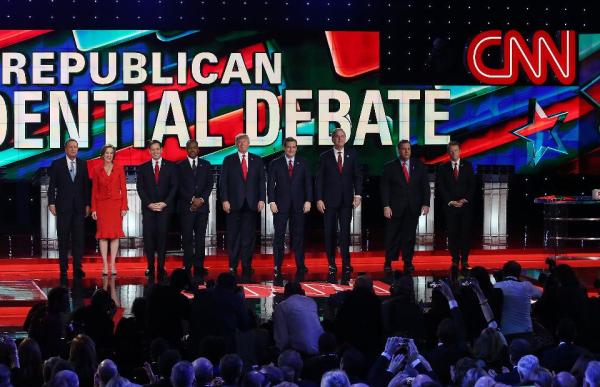
Washington (CNN) – Republican presidential candidates sought to cement — or improve — their standings in a debate Tuesday night that comes less than two months before the first votes of the election season are cast.

The CNN debate in Las Vegas marked the first time the White House hopefuls shared a stage since terror attacks in Paris and San Bernardino, California. They flashed their foreign policy credentials and targeted each others’ weaknesses in the debate that lasted more than two hours and focused exclusively on foreign policy and national security.

The result of the showdown: Some winners, and some losers.

The Winners

Jeb Bush

The former Florida governor walked onto the CNN debate stage on Tuesday facing a make-or-break moment for his struggling campaign.

Polling at about 3% nationally, pundits had low expectations for Bush. But he was able to make the most of the moment and his performance will likely reassure skittish donors and supporters who have doubted him.

Appearing confident, Bush repeatedly engaged front-runner Donald Trump and at times flustered the real estate mogul. Unlike previous debates where he has backed off, Bush didn’t relent in the face of Trump’s return fire.

“If you think this is tough and you’re not being treated fairly, imagine what it’s going to be like dealing with Putin or dealing with President Xi or dealing with the Islamic terrorism that exists,” Bush said over Trump’s persistent interruptions.

CNN political commentator Michael Smerconish said after the debate that Bush “turned in a strong performance” with his ability to repeatedly needle Trump.

“Jeb had a good night,” he said.

US-VOTE-REPUBLICANS-DEBATE

Republican presidential candidate businessman Donald Trump speaks as former Gov. Florida Jeb Bush (R) and Texas Sen.Ted Cruz (C) look on during the Republican Presidential Debate, hosted by CNN. (Photo Credit: ROBYN BECK/AFP/Getty Images)

Ted Cruz

The tea party favorite avoided a cage match with front-runner Donald Trump in favor of a sparring match with Rubio.

Cruz and Trump have largely avoided skirmishes on the campaign trail but that ended in recent days as the Texas senator’s standing improves in Iowa.

Former Mitt Romney aide and current CNN political commentator Kevin Madden said Cruz’s strategy of avoiding confrontation on the debate stage was effective.

“I think the strategy Cruz has is working, bear hugging Donald Trump. I think Donald Trump does not feel antagonized,” he said.

While Cruz didn’t give viewers anything like the fiery and memorable soundbites his supporters savored in the last debate, the Texas senator gave a strong performance sure to please his base. And by taking aim at — and holding his ground against — Rubio, Cruz did nothing to stall his burgeoning momentum.

Marco Rubio

Sen. Marco Rubio delivered a front-runner’s performance, as he parried blows from all sides in the crowded field.

Rubio worked to stay above the fray of candidates, focusing on showing off his in-depth understanding of foreign policy and deflecting the attacks his competitors hurled his way. The Florida senator, though engaged in heated exchanges with Cruz and Rand Paul at times, mostly sought to flex his hawkish national security positions rather than attack his competitors.

When prompted to address Trump’s proposal to bar foreign Muslims from entering the U.S. — which Rubio opposes — or to address his recent criticism of Cruz, Rubio didn’t bite. Instead, the Florida senator used the opportunity to speak at length about foreign policy concerns and his own proposals — or to attacking President Barack Obama’s administration.

Donald Trump

As the real estate mogul has done in recent debates, Donald Trump offered a measured performance stylistically different from the fiery stump speeches he delivers at rallies to supporters. And the typically confrontational businessman largely avoided tangling with his fellow contenders.

It was a safe performance for Trump, but it’s one that certainly won’t deter his supporters and won’t do anything to hurt his front-runner status.

CNN political commentator David Axelrod, a former top Obama adviser, said that while Trump didn’t meet the bar on facts and “linear thinking,” he was “in character.”

“I think he probably did what he needed to do,” Axelrod said, adding that it didn’t hurt that few of the candidates to Trump’s right and left were “eager to tangle” with the front-runner.

christie

Associated Press / John Lochner

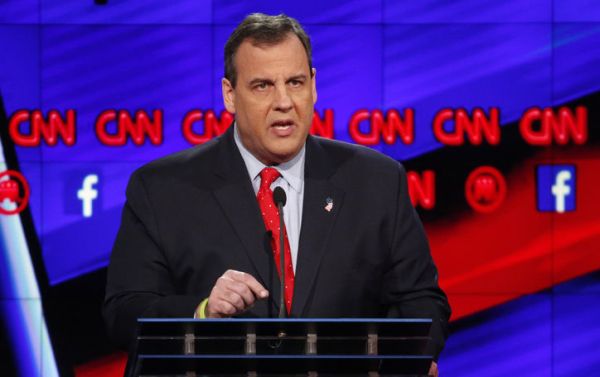
Chris Christie

New Jersey Gov. Chris Christie’s goal on Tuesday was to try and further his recent rise in stock in the early primary state of New Hampshire, where talk of national security has boosted the former federal prosecutor.

Christie managed to poke at the three senators in the race by lamenting the tit-for-tat debates Cruz, Rubio and Paul engaged in. The governor continued to play to his executive experience and his prosecutions of terrorism cases as a U.S. attorney.

In one of his strongest moments, Christie slammed the senators on stage as “people who’ve never had to make a consequential decision in an executive position” and proclaimed that voters were looking for “a president who actually knows what they’re doing.”

CNN political commentator Jeffrey Lord, a Trump supporter, noted that like Trump, Christie “was delivering a message” on stage rather than getting too “in the weeds” on policy.

Content Originally Written and Published By Jeremy Diamond, CNN