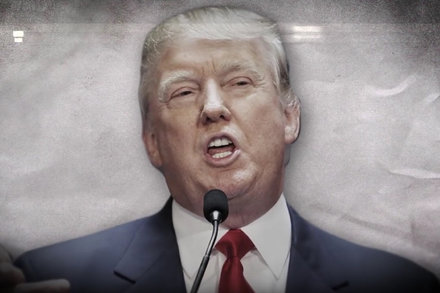
Carly Fiorina said she’s been “called every b-word in the book” at the Republican debate

vox

Updated by  via VOX

Photo Source: The Daily Beast

Carly Fiorina said in her opening statement at the CNN Republican debate on Tuesday that she has been “called every b-word in the book.”

Fiorina clearly meant “bitch,” or perhaps “bossy” — in any case, a gendered insult. The comment, and indeed her entire opening statement, was heavily focused on the ways she has struggled to overcome specifically gender-based obstacles to get to the top.

In discussing her struggles and challenges, Fiorina led off with very gendered ones: “I have been tested. I have beaten breast cancer. I have buried a child.”

Then she transitioned into her corporate and political ladder climbing: “I started as a secretary. I fought my way to the top of corporate America while being called every b-word in the book. I fought my way into this election.”

And later on in the debate, Fiorina paraphrased Margaret Thatcher: “If you want something talked about, ask a man. If you want something done, ask a woman.”

It’s likely that Fiorina is trying to set herself up as an opponent who could neutralize one of Hillary Clinton‘s big talking points — her potential status as first woman president of the United States. That could diffuse Clinton’s support from people who generally want to see a woman president; one report found donors who gave to both Clinton and Fiorina, despite their stark differences on policy.

Fiorina may scorn liberal identity politics, but she has had no problem with the word “feminism,” or with discussing the ways that being a woman presents unique challenges to her that men don’t have to deal with. She calls out sexism when she sees it used against her, like her ad pushing back against Donald Trump for making fun of her face. “A feminist is a woman who lives the life she chooses,” Fiorina has said. “A woman may choose to have five children and home-school them. She may choose to become a CEO, or run for President.”

But Fiorina’s feminism is a very individualistic, have-it-all, lean-in, corporate type of feminism — one where any woman can make it to the top if she just “fights” hard enough. One where talking about comprehensive access to reproductive health care is actually an insult to women because it supposedly reduces them to their body parts and makes them dependent on government. And one that doesn’t acknowledge the structural challenges, from implicit bias in the workplace to the impossible “choice” between family income and child care, that make living “the life she chooses” easier said than done for too many American women.

Group Backing John Kasich Likens Donald Trump to Hippo in New Ad

HIPPO-CRIT

By NICK CORASANITI via NYTimes

New Day for America, a “super PAC” supporting Gov. John R. Kasich of Ohio, is aggressively attacking Donald J. Trump, now with a mocking commercial titled “Hippo-Crit” that suggests Mr. Trump belongs in the White House about as much as he belongs in a zoo.

On Screen

Mr. Trump and a hippopotamus, their mouths agape, alternate or share the screen, as a visual device resembles the bars of a cage. Both are seemingly “voiced” by the snorts and grunts of an indeterminate off-screen mammal. Unflattering images of Mr. Trump flip or spin away before surveillance-style images show Trump-brand neckties made in China and his “palatial D.C. hotel” being built by “illegal immigrants.” Available to save the day in the end is Mr. Kasich, shown in a contemplative pose beside an American flag and a large, Oval Office-like window.

The Message

Other attacks on aspects of Mr. Trump’s background have whiffed. But this ad pungently goes after Mr. Trump on two of the red-meat issues that have made him so popular with rank-and-file Republicans: illegal immigration and the outsourcing of American jobs.

Fact Check

Mr. Trump’s name-brand ties are indeed made in China, a decision he defended on grounds that China “has manipulated their currency to such a point that it’s impossible for our companies to compete.” The Washington Post found several workers at Mr. Trump’s Washington hotel project who had entered the country illegally. His campaign says the project is following all applicable laws.

Where

On New Hampshire television stations as part of a $2.5 million ad campaign against Mr. Trump.

Takeaway

Attacking Mr. Trump on immigration and jobs — issues on which he has based much of his campaign — and with the sort of ridicule that Mr. Trump has used on others, could gain Mr. Kasich some much-needed attention.

via IFTTT

Chris Christie Reminds Voters, Again and Again, of His Prosecutor Days

christie

By ALAN RAPPEPORT via NYTimes

Most governors who seek the presidency promote executive experience as their chief credential, regaling voters with tales of big decisions they have made and budgets they have balanced.

Gov. Chris Christie of New Jersey also mentions those things, but lately he has been digging deeper into his résumé. With terrorism taking center stage in the 2016 race, Mr. Christie seems to take the most pride in his days as a federal prosecutor.

Five times during Tuesday’s Republican presidential debate, and often unprompted, Mr. Christie managed to work in the fact that he was once a United States attorney in New Jersey. The experience, he argues, makes him best suited to destroy the Islamic State.

“I will tell you this, I’m a former federal prosecutor, I’ve fought terrorists,” Mr. Christie said in opening remarks.

Moments later, when asked how he would alleviate the fear of terrorist attacks that has become pervasive in America, Mr. Christie said that because of his work as a prosecutor he knew that terrorists were planning attacks elsewhere. People have good reason to be worried, he suggested.

“I could tell you this, as a former federal prosecutor, if a center for the developmentally disabled in San Bernardino, Calif., is now a target for terrorists, that means everywhere in America is a target for these terrorists,” Mr. Christie said.

As rivals debated the details of immigration policy, Mr. Christie jumped in to make the case that Senator Marco Rubio and Senator Ted Cruz were just talkers who knew nothing about really fighting terror. As a prosecutor, he reminded viewers again, he has actually gone up against terrorists.

“This is the difference between having been a federal prosecutor instead of being one of 100 people debating it,” Mr. Christie said, explaining that he had used the Patriot Act to stymie attacks in New Jersey.

Mr. Christie was appointed as federal prosecutor in 2001 and served in that role until 2008, before becoming New Jersey’s governor. His popularity in the state has faded in recent years amid economic turmoil, the George Washington Bridge scandal and frequent travel around the country to raise money and campaign for higher office.

Looking to jump-start his flagging presidential campaign, Mr. Christie has latched onto his experience from the aftermath of attacks of Sept. 11, 2001, to remake himself as a national security candidate.

As Tuesday’s debate was winding down, the conversation turned to taking in Syrian refugees. Mr. Christie has taken a hard line on the issue, saying that none should be accepted and pointing to concerns raised by James Comey, the F.B.I. director.

“Now, listen, I’m a former federal prosecutor, I know Jim Comey,” Mr. Christie said, mentioning that the two go way back and had even worked together in law enforcement. “He was the U.S. attorney in Manhattan when I was a U.S. attorney in New Jersey.

via IFTTT

NPR #News: No Government Shutdown Likely, But Here’s What’s In The Spending Bill

Published by Susan Davis via NPR

ap_149712644584_wide-86d5caa3df80eba377219de4e722551fc7917513-s800-c85

J. Scott Applewhite / Associated Press

House Speaker Paul Ryan reached a deal late Tuesday on two major pieces of legislation: a $1.1 trillion spending package and a $645 billion package of tax breaks.

The $1.1 trillion spending bill includes $548 billion in defense spending, $518 billion in non-defense spending, and $73.7 billion in additional funds for the Pentagon for ongoing combat operations.

The package is made up of the 12 annual spending bills, which have been bundled into one “omnibus” spending deal that provides funding for the next fiscal year, through Sept. 30, 2016.

Democrats had the upper hand in spending talks because their votes will supply the bulk of support to pass it. They successfully swatted down Republican efforts to effectively block Syrian refugees from entering the U.S., defund Planned Parenthood, undo President Obama’s environmental regulations and repeal a campaign finance law.

The spending package includes two notable “riders” or unrelated policy provisions tucked into the must-pass bill.

The first overhauls the visa-waiver program, which allows foreign travelers from 38 nations to make short trips to the U.S. without a visa. The provision includes an added layer of security screening for those travelers if they have recently visited Iraq, Syria or other nations with significant terrorist activity. A stand-alone bill on the same provision passed the House with overwhelming bipartisan support last week.

The second provision ends the 40-year ban on exporting U.S. oil. The provision is a victory for Republicans, although many Democrats from oil-friendly states, like North Dakota Sen. Heidi Heitkamp, cheered its inclusion in the spending package.

Republicans rallied in support of the tax side of the deal. The package makes permanent many popular business tax breaks and delays new taxes on medical devices and high-end health insurance plans that are supposed to help pay for the Affordable Care Act. Many Democrats, particularly in the House, are expected to oppose the tax package, which will, in turn, rely on GOP votes for passage.

The House is scheduled to vote on the measures separately. The tax package will get a vote Thursday, while the spending package will get a vote Friday. The Senate is expected to then bundle the two packages together for a final vote before sending it to President Obama for his signature.

Here are some additional highlights from the spending bill:

— A year delay on new menu labeling regulations for grocery stores and food retailers to give them more time to comply with new federal standards.

— $282 million in additional funds for the Census Bureau to prepare for the 2020 census.

— Extends the existing prohibition on the transfer or release of Guantanamo detainees into the U.S.

— A 1 percent military pay raise and $300 million to address a military housing allowance shortfall.

— $111 billion for new military equipment, including 68 F-35 Joint-Strike Fighters, 102 Black Hawk helicopters, 64 remanufactured Apache helicopters, 3 littoral combat ships, 2 attack submarines, 2 DDG-51 guided missile destroyers, 7 EA-18G Growlers, 5 F-18E/F Super Hornets and 12 KC-46 tankers.

— It largely freezes funding levels for the Internal Revenue Service, which is receiving $1.7 billion less than President Obama originally wanted.

— $45 million for school improvement in Washington, D.C., including $15 million for scholarships to low-income students in the District to attend private schools.

— A pay freeze for Vice President Biden.

— $1.9 billion for the U.S. Secret Service, which is an increase of $268 million above last year.

— Cuts $15 million in spending for the Independent Payment Advisory Board, created under the Affordable Care Act.

— An additional $2 billion in funds for the National Institutes of Health for a total of $32 billion.

— An additional $175 million for a total of $5.6 billion for U.S. embassy security.

— Zero funding for high-speed rail, but Amtrak grant funding holds at $1.4 billion with $50 million provided to improve rail safety.

Here are some additional highlights from the tax package:

— It makes permanent the $1,000 child tax credit.

— It makes permanent the American Opportunity tax credit, which helps pay for college. It’s indexed to inflation and helps cover qualifying expenses in the first two years of post-secondary education.

— It makes permanent the earned income tax credit for low- and moderate-income workers. For 2009 to 2017, the EITC is temporarily increased for those with three or more children.

— It makes permanent a $250 deduction for elementary and secondary school teachers who pay out of pocket for school supplies.

— It makes permanent the research and development tax credit.

— It makes permanent a 20 percent employer wage credit for employees called to active military duty.

— It extends through 2016 an expensing provision that covers up to $15 million of qualified film, television and live theater productions.

— It extends through 2016 the $13.25 per proof gallon excise tax for Puerto Rican and U.S. Virgin Islands rum.

— It extends through 2016 the 10 percent credit for plug-in electric motorcycles and two-wheeled vehicles, capped at $2,500.

— It extends through 2016 the tax credit for manufacturers of qualifying energy-efficient residential homes.

— A provision that allows an individual to exclude from gross income any payment received as compensation for a wrongful incarceration.

— A provision defines hard cider for levying alcohol excise taxes as a beverage made from apples or pears, with an alcohol content of 0.5 to 8.5 percent, and a carbonation level that does not exceed 6.4 grams per liter.

— A provision prohibiting IRS employees from using personal email accounts to conduct any official business.


NPR #News: Congress’ Funding Package Offers No Debt Assistance To Puerto Rico

Published by CAMILA DOMONOSKE via NPR

gettyimages-479121010_wide-0970882d425eb69d56168b73ef3bb36498e985e2-s800-c85

The Puerto Rican capitol building, above, in San Juan is seen on July 1, 2015. The island’s residents are struggling to cope with the government’s $72 billion debt. (Photo Credit: Joe Raedle / Getty Images)

A massive tax and spending bill, designed to keep the U.S. government running for months, doesn’t include any direct debt relief for struggling Puerto Rico.

The unincorporated U.S. territory is struggling to make payments on $72 billion of debt. There are serious concerns that the island may default on Jan. 1, when more than $900 million comes due (including over $350 million the Puerto Rican government is constitutionally obligated to pay). The island only narrowly managed to make a $350 million payment on Dec. 1.

Puerto Rico’s economic woes run deep and have been building for a while, as NPR’s Greg Allen reported in October:

“The island’s financial problems are tied to a larger economic crisis. Over the last decade, Puerto Rico has lost a quarter-million jobs, and unemployment is twice the national average. The spiraling economy has sparked a huge outmigration: 84,000 people left the island last year. Treasury official Antonio Weiss says once the money runs out in Puerto Rico, essential services may be cut, and the financial problems could become a humanitarian crisis.”

Some lawmakers had proposed that municipalities in Puerto Rico be permitted to declare bankruptcy. Currently, that option is available to cities in U.S. states, but not to municipal entities in U.S. territories.

The White House had suggested a new kind of bankruptcy, specifically for territories, that would allow Puerto Rico to restructure its debt more directly.

Republican Sen. Orrin Hatch, the head of the Senate Finance Committee, opposed both those ideas — but suggested instead that Congress create an “oversight authority” that could spend up to $3 billion to stabilize Puerto Rico’s finances, Reuters reported Tuesday.

None of those proposals appeared in the tax and spending passage as of Wednesday, Reuters notes.

While Congress’ funding bill doesn’t include any direct relief for Puerto Rico’s debt crisis, it does prescribe reforms to Puerto Rico’s health system, The Chicago Tribune reports:

“The legislation would increase payments to hospitals on the island and provide bonusMedicare payments to doctors and medical facilities that adopt electronic health record-keeping, according to the text of the bill posted early Wednesday on the House website. …

“Puerto Rico, where 46 percent of citizens live in poverty, gets a lower percentage of federal funds for Medicaid than 26 other states even though none comes close to its levels of privation. Making up for inadequate federal funding has contributed to Puerto Rico’s debt crisis, commonwealth officials say.”

House Speaker Paul Ryan is expected to bring the deal to a vote on Thursday, and the Senate is expected to vote by the end of the week, Reuters reports.

“If Congress doesn’t take action, the consequences of their inaction will be as severe as they are predictable,” Puerto Rico’s sole Member of Congress tweeted Wednesday.